It requires strategic planning and strong management to handle groups across time zones and platforms. The enterprise world is stuffed with firms which have harnessed workplace flexibility to garner enormous advantages. Let’s explore a few real-world examples that illustrate how flexible work insurance policies can significantly profit workers and employers. The first step in path of facilitating workplace flexibility is seamlessly integrating know-how into your operations. This may be achieved through numerous innovative instruments designed to adapt to the organization’s and its workers’ changing wants. Flexibility in the workplace plays a pivotal position in an worker’s ongoing skilled and private improvement.
Flexible work preparations have become increasingly popular in right now’s trendy office. They provide employees the chance to have a greater work-life steadiness and can result in elevated productiveness and job satisfaction. In order to measure the success of these arrangements, organizations can use a variety of key efficiency indicators (KPIs) to assess their effectiveness and influence on the overall efficiency of the company. Furthermore, AI can analyze employee efficiency and supply insights that assist organizations tailor their versatile work insurance policies. For instance, AI algorithms can determine patterns in employee productiveness, permitting managers to understand when and where their teams are most effective.
Workers’ perspectives could change as they learn more about cybersecurity and the way important its role is. In different words, when workers turn out to be snug utilizing built-in safety tools, their productiveness could improve because cybersecurity will appear to be much less of a hurdle. No firm can make cybersecurity a precedence without implementing complete employee cybersecurity coaching. For instance, a hacker could goal a company’s weakest link when executing a phishing scam. Often, cybersecurity assaults target workers, not techniques, based on Harvard Business Review (HBR). If workers understand cybersecurity as a hurdle, they’ll discover ways round it somewhat than following protocol.
This approach guarantees to stability flexibility and collaboration while driving productiveness, however it also presents new challenges for HR leaders and organisations striving to adapt. By now, you understand that the blended work surroundings demands a delicate stability. A stability between permitting staff the pliability they crave and maintaining the productiveness companies want.
However, in a versatile work environment, maintaining a robust company tradition could be difficult. The physical separation of team members can lead to a dilution of shared values and a sense of belonging. With extra employees working remotely or adopting flexible schedules, there is a discount in day by day commuting, which may result in decreased traffic congestion and lower greenhouse gasoline emissions. In this article, we are going to delve into the key ideas surrounding office flexibility, exploring its varied varieties and the myriad advantages it presents to both individuals and organizations. Join us as we unpack the transformative power of workplace flexibility and its position in shaping the method ahead for work. Supporting work-life balance is vital in a hybrid work surroundings to prevent burnout and preserve employee well-being.
This evolution in the workplace is a testomony to our society’s commitment to enhancing the wellbeing of its workforce. By showcasing the optimistic outcomes of flexibility, workers can contribute to a tradition that values and prioritizes worker wants. Workplace flexibility has turn out to be a buzzword in today’s employment trade, and for good reason.
Launch your flexible work program as a trial to work out any issues earlier than full implementation. Ask for feedback and make any necessary changes before rolling it out company-wide. With the liberty to take time off when wanted, staff don’t should call in sick for appointments or private issues. Implementing a seamless workplace flexibility association requires a stable strategy. This is essential as a result of when office flexibility is dealt with wrongly, it causes more hurt than good. Workplace flexibility might be a contemporary solution within the enterprise world, nevertheless it has been around longer than anybody suspects.
Sometimes workers have a hard time saying that they are too busy or not busy sufficient at work. Encourage feedback, and be clear that you just expect them to inform you how heavy their workload is. Through participation, you’ll keep lively, reduce stress and build positive habits. This helps to keep work at the workplace for making space for high quality personal time.
Furthermore, distant work opens up alternatives for corporations to faucet into a world expertise pool. By embracing remote work, organizations can access a various range of abilities and experience from around the world, contributing to innovation and progress. Workplace flexibility considerably enhances productiveness by offering workers more control over when, where, and the way they work.
Employees working with versatile hours are much less likely to need excused absences, which finally results in fewer disruptions in the workflow. Offering flexible work preparations may help attract and retain a diverse and inclusive workforce. For example, dad and mom with younger kids or caregivers for elderly members of the family may require versatile work arrangements to stability their personal responsibilities with their professional obligations. By offering these preparations, employers can create a extra diverse and inclusive workplace and improve employee retention charges. One of essentially the most significant latest shifts has been the rise of hybrid work models—where employees break up their time between working remotely and within the workplace.
Additionally, flexible work preparations can reduce the necessity for office supplies and sources. With fewer workers within the workplace at any given time, companies can optimize their resource allocation, resulting in further price efficiencies. This financial flexibility could be reinvested into different areas of the enterprise, such as worker growth or technology upgrades. Job sharing includes two or more employees sharing the responsibilities of a single full-time place. This arrangement allows people to work part-time while nonetheless contributing to a job that might usually require a full-time commitment. Job sharing may be significantly useful for those who might not have the ability to commit to a full-time schedule because of private circumstances, similar to caregiving obligations.
Offices that mirror this mindset are seeing larger engagement and stronger collaboration. Companies save up to 40% in office-space costs, while workers minimize daily expenses by about $51 on commuting, meals, and fuel (Source). For organizations, that provides up to roughly $11,000 saved per employee every year (Source). Economic elements of general worker well being and well-being, along with physical, psychological, and social features, are a elementary focus of the NIOSH Healthy Work Design and Well-being Program. Work flexibility is expected to be an increasingly vital contributor to employee well-being in the future.
This means outlining when staff must be available, setting expectations for productiveness, and establishing methods for tracking work progress. When employees have extra control over their work hours, it could possibly lead to challenges in self-management. They may become easily distracted, which could cut back their overall productivity. To overcome this, employees must develop robust self-discipline to manage their time effectively.
Additionally, creating common feedback loops ensures that modifications are addressed promptly somewhat than inflicting disruptions at later phases. By planning for risks in advance, businesses guarantee they can adapt to challenges without compromising workflow efficiency. Tracking work patterns and detecting early indicators of inefficiencies further strengthen danger preparedness. Nisha presently leads the content marketing team at Profit.co with experience in various fields, such as science, training, law, and administration. Unlock workforce insights, analyze skill gaps, track inner mobility, and forecast hiring needs so teams have the right expertise in the best roles and you can construct a workforce ready for growth.
To find out how we will assist in crafting a more healthy, extra productive office, visit Global Healthcare Resources – Wellness Consulting. You need to remain safe and defend your data, devices, and networks from any threats or risks. You must comply with the insurance policies and tips of your group, and use the permitted instruments and platforms on your work. You additionally want to use sturdy passwords, encryption, VPN, antivirus, firewall, and backup techniques to safeguard your data and equipment. You additionally need to focus on and keep away from any phishing, malware, or hacking attempts, and report any incidents or points to your IT department or supervisor. Emerging developments like hybrid work fashions, where staff cut up their time between distant and on-site work, are gaining reputation.
How Australian organisations can create optimistic versatile workplace situations for each men and women. And when Telstra began rolling out Agile at scale, it linked the effort to the organisation’s broader inclusion and suppleness strategy. Teams were inspired to create charters defining their own norms, together with start and finish occasions, flexible methods of working and tips for inclusive meetings. Measuring and transparently reporting on flexibility will increase accountability and implementation.
Instead of monitoring hours worked, companies are specializing in output and results, which is an effective factor. Measuring the success of flexibility at work involves assessing each quantitative and qualitative indicators that mirror its influence on staff and the organization. Quantitatively, success may be gauged by way of metrics such as productiveness levels, absenteeism charges, and employee turnover. Managers must implement strong communication instruments and practices to maintain up clarity and connectivity with remote workers.
Employees often tie flexibility to a higher work-life balance, decreased burnout, and improved well-being. An International Workplace Group survey confirmed that 80% of employees provided two similar job opportunities would choose the one that provides essentially the most flexibility. Video conferencing, project administration software, and digital collaboration platforms could make for seamless operations and communication. Investing in a reliable and safe technological infrastructure fights off issues associated to knowledge security and improves workflow efficiency. Transformational leaders are known for his or her ability to encourage and inspire their workers.
Organizations must adapt their KPIs to accommodate these evolving work arrangements. Flexible work preparations have gained important recognition lately, as they provide numerous benefits to each staff and employers. However, to actually understand the value and effectiveness of those arrangements, it’s essential to measure their success. This association is particularly helpful for employees who desire lowered work hours or produce other private commitments.
Even historically conservative industries such as regulation and accounting at the second are exploring flex scheduling to attract and retain top talent. If the area doesn’t help people join or create value they couldn’t at home, they’ll cease coming. Once the thought of hybrid work was introduced, it modified the “why” behind folks coming to the workplace. Some teams meet round kitchen tables, others in offices rebuilt for connection. Mindfulness can improve your awareness of when to use discipline and when to be flexible. By being present and attuned to your emotions and circumstances, you can make extra conscious selections about how to reply to challenges.
Spaces like Zoku are continually evolving to satisfy the needs of hybrid staff, offering adaptable, tech-enabled environments that assist each productivity and well-being. To support remote work, firms must spend cash on reliable technology and strong security measures. This includes ensuring that staff have safe entry to needed resources and that information is protected when working from varied areas.
Adopt a results-oriented work surroundings (ROWE) where employees are evaluated primarily based on their output quite than hours labored. This approach emphasizes productivity and outcomes, allowing staff to work in ways in which swimsuit them greatest while maintaining clear efficiency expectations. Provide ongoing coaching and improvement alternatives to keep staff engaged and up-to-date with industry developments. Investing in continuous studying enhances employee expertise and demonstrates a commitment to their professional development, leading to higher retention rates and job satisfaction. An example of remote/hybrid has been the big tech companies of Silicon Valley, which have been pioneers in embracing the models and leveraging expertise to rearrange flexible working arrangements. For instance, over a 3rd (35%) of Silicon Valley staff now work from home, up from 6% in 2019 pre-pandemic, and a few, like Twitter, have introduced everlasting distant work choices.
Use these hours for troublesome work and save simpler duties for low-energy durations. Overall, this extraordinary interval has given companies unequalled insight into each the worth of flexibility and how to do it right. By following best practices, organisations set themselves up for success in the next section of hybrid work, and beyond. At a team level, fast and frequent surveys of team health (pulse checks) can be used to measure individuals’ engagement with flexibility. Collecting feedback on whether or not flexibility is working properly or not, after which discussing this feedback live at weekly or monthly staff meetings, puts teams in command of shaping the method in which they work. For organisations to be truly versatile, it’s not enough for people to embrace it; groups must, too.
As extra employees seek a better work-life stability and adaptability in how and where they work, it’s essential for firms to adapt and supply versatile work options. In this comprehensive information, we are going to discover the vital thing steps organizations can take to improve versatile work preparations and create a more productive and engaged workforce. Furthermore, these younger staff value autonomy and the ability to work in environments that go well with their personal kinds. Companies that embrace versatile work arrangements, similar to distant work or hybrid models, are more doubtless to attract and retain these employees.
Promoting mental wellness by encouraging workers to take days off for mental well being enhances their psychological well-being. Workshops and resources on prioritizing duties, setting sensible deadlines, and avoiding procrastination can equip workers with the tools they should preserve an excellent work-life stability. By providing extended leave options, organizations reveal a dedication to their employees’ family needs, contributing to a constructive work tradition and employee retention. An imbalance is obvious when work encroaches on private time, sidelining relationships and leisure, signaling a need for adjustment. Early recognition of these indicators is crucial to stop more critical bodily and mental health issues. Work-life steadiness is useful not just for physical health but also for psychological well-being.
Flexibility has plenty of benefits each to the worker and the group however most employers don’t acknowledge such advantages and the impression they have on the overall productiveness of the workforce. One of the realities that the majority employers are yet to come back in terms with is that it doesn’t matter when, the place or how an employee will get their work accomplished. However, flexibility is a double-edged sword and such an arrangement will only work if the mentioned employees are doing their jobs and meeting deadlines and set goals. These arrangements can considerably enhance employee well-being and general organizational performance.
These tools permit for real-time communication, file sharing, and video conferencing, enabling teams to work collectively seamlessly, regardless of their bodily location. This flexibility not solely enhances productivity but additionally fosters a culture of inclusivity, as staff can engage with their colleagues with out the constraints of conventional office hours. One of essentially the most important challenges of a flexible workplace is sustaining a strong company culture. When workers are dispersed, it can be difficult to foster a way of belonging and shared values. However, organizations can take proactive steps to domesticate a positive culture, even in a remote setting.
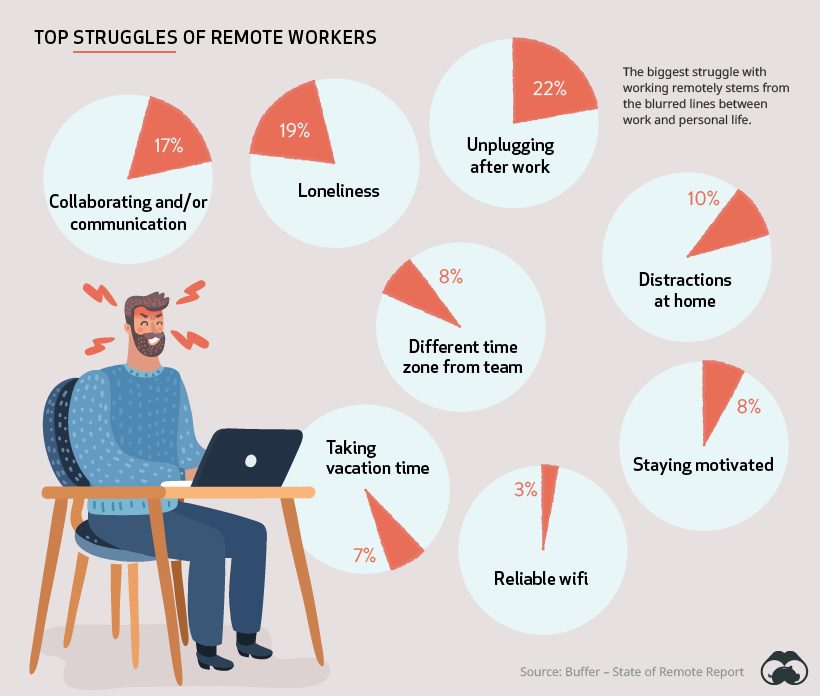
For an rising number of remote staff, it has become much more durable to set boundaries at work and preserve a wholesome work-life steadiness. This might imply lengthy hours, weekend work, and pointless extra time – all factors that encroach in your personal time. Employers can provide distant work choices, flexible hours, and job sharing to distribute responsibilities and hours among a quantity of staff. As a group grows and extra workers search out methods to productively divide their time between house and work, sustaining a robust culture of accountability and clear communication turns into more and more complicated. Here, members of Forbes Coaches Council talk about how entrepreneurs can set expectations for remote and on-site work that will maintain team members engaged and acting at excessive levels, irrespective of where they are. An entrepreneur at present would possibly decide to construct a completely distant enterprise, or they may need teams on-site to launch and develop their endeavor.
To tackle this, organizations should communicate the benefits and rationale behind flexibility. Emphasize the positive impacts on productivity, worker satisfaction, and work-life stability. Managers have to assess the needs and preferences of their staff, in addition to the character of the work being performed. By tailoring versatile insurance policies to the precise necessities of the group and its employees, managers can create an surroundings that promotes flexibility and enhances general efficiency. In right now’s fast-paced and ever-changing work landscape, flexibility has turn into a key driver in improving workplace productivity. To truly thrive within the fashionable office, organizations must embrace flexibility as an essential technique.
By evaluating the benefits, addressing areas of improvement, and overcoming challenges, organizations can create a piece environment that promotes productiveness, worker satisfaction, and overall success. Flexible work preparations have become increasingly in style in latest years, as organizations recognize the significance of work-life stability and the necessity to accommodate numerous worker needs. These preparations not only profit workers by permitting them to higher handle their personal and professional lives, however in addition they have the potential to enhance productivity and employee satisfaction.
If you’ve ever worked in an workplace before, chances are that you are familiar with the “I can’t wait for 5 pm” concept. Your productivity reduces by 3 pm and after that, all you are in a place to do is countdown minutes doing so little until that time you possibly can depart the office. To have a productive workforce, one of the primary issues that workers must have is flexibility. Flexibility is usually tied to work-life steadiness, independence, informal work surroundings, and a conducive work setting.
By understanding the various types of versatile work arrangements and their advantages, HR professionals can tailor insurance policies to fulfill the distinctive needs of their workforce. Flexible work hours are a office practice that allows employees to have a extra versatile schedule, such as starting and ending work at completely different instances or taking time off through the day. This can include choices similar to compressed workweeks, the place workers work longer days but have long weekends, or part-time schedules. A versatile work schedule can help workers balance their work and private lives, leading to improved morale, reduced stress, and increased productivity.
Cesário and Chambal (2017) measured employee productiveness through a self-reported earlier year efficiency ranking, which though stronger than “employee-perceived productivity,” continues to be subjective. Productivity turns into much more tough to measure in digital or information staff, as a end result of outcomes are often subjective measures and tend to vary by employee type and job operate. The predominant measure of productivity on this physique of research was worker perceived productiveness (Chang et al., 2021; Chu et al., 2022; Galanti et al., 2021; Howe Stability supplies a way of safety to employees, guaranteeing they feel valued and part of the company’s long-term imaginative and prescient.
Senior executives ought to encourage periodic in-person conferences or team-building events to assist preserve relationships and strengthen firm tradition. These interactions could be scheduled quarterly or semi-annually, relying on the organisation’s wants and the geographic location of group members. Senior executives should put cash into communication and collaboration instruments that enable seamless interaction regardless of location. Platforms like Slack, Microsoft Teams, and Zoom might help bridge the gap between remote staff and people in the workplace.
This can be difficult as a outcome of conventional metrics such because the variety of hours worked or attendance may not be related in a versatile work environment. Instead, managers may must focus on results-based metrics that measure worker output. Flexibility in the workplace can lead to improved employee satisfaction and morale.
Using a task management software might help everyone see who must do what and by when. In today’s submit, we are going to see the professionals, cons, and costs of the highest 10 workforce optimization platforms and more. The time period ‘efficiency’ may be outlined because the employee’s capacity to achieve a aim without wasting energy and energy. Employee effectivity helps you identify your employee’s ability to handle business processes and actions.
By embracing a hybrid work model, organisations will be succesful of domesticate a more adaptable, engaged, and high-performing workforce, and in the end drive overall success in an ever-evolving business panorama. This mannequin may go properly for organizations that place a premium on in-person collaboration however recognize the necessity for flexibility in workplace work. Employers can use Total Compensation Statement to showcase the complete worker benefits, including remote work flexibility, guaranteeing staff understand the value of their total compensation package. Today’s businesses face a tough dilemma between cybersecurity and productivity.
Let’s discover two key areas to contemplate when measuring the impression of flexibility. Autonomy, on the opposite hand, empowers workers to make selections and take accountability for his or her work. When staff have the liberty to choose on how they approach their tasks, they’ll leverage their distinctive strengths and work in a way that suits them best. This autonomy not only boosts particular person efficiency but also encourages a sense of possession and accountability.
This can boost their motivation, creativity, and productivity, in addition to scale back micromanagement and stress. However, to empower your group, you should trust them, and allow them to know that you simply trust them. You can do that by delegating duties, giving autonomy, and providing help and steering when needed. As a end result, Microsoft noticed an increase in employee engagement and satisfaction, as nicely as improved retention charges. The company’s capability to adapt its versatile work insurance policies to satisfy each employee wants and business objectives serves as a priceless lesson for different organisations navigating this steadiness.
Flexible work options, corresponding to working from residence or taking breaks through the day, might help workers really feel more in command of their schedules and better manage their responsibilities. To effectively transition to or enhance flexible work arrangements, a crucial initial step is for corporations to conduct a complete analysis of their present capabilities and limitations on this area. This course of begins with a close examination of the prevailing company tradition. Is there a prevailing openness to change and innovation, or does the culture cling to conventional work models?
COVID-19 exposed how rigid and outdated many work structures had turn into and accelerated the dialog of expanding work-life stability. With these survey findings in mind, it’s clear that extending versatile scheduling to your workers – including remote work, hybrid work schedules, or a beneficiant paid day with out work policy – might help enhance retention. Flexibility within the workplace is now thought of essential, not just an additional benefit, and is extremely valued for fostering personal growth, autonomy, and a better work-life steadiness. Companies that adapt to this shift are seeing tangible rewards like improved productivity, expertise attraction and retention, enhanced morale, and price financial savings. Facing the challenge of scaling in a dynamic work setting, Dr. Martens turned to Yarooms, a workplace technology solution, to streamline flexible house administration. This adoption has alleviated workplace tensions and enabled the company to adapt its workspace frequently.
Understanding the present landscape will help in crafting a tailor-made method that aligns with the organization’s culture and operational wants. Finally, managing efficiency and accountability in a flexible work environment may be challenging for managers. Traditional efficiency metrics could not apply in a remote or flexible setting, making it essential for leaders to adapt their management styles and expectations. Flexible hours enable staff to decide on their working hours within a set range. This mannequin can accommodate personal commitments, similar to childcare or education, and might lead to a more balanced work-life integration.
Also, companies can benefit from a wider geographical space for the talent pool, decrease overheads related to office house, and enhancements in variety. Hybrid work environments are ushering in a extra inclusive and various workforce—diverse intellect, training, and backgrounds that may foster innovation. While there are numerous benefits to workplace flexibility, it is essential to handle the potential challenges that may come up. By using The Five Ways to Happiness at Work, organizations can design flexible working insurance policies that create each joyful people and high-performing teams.
By allowing workers to work when it fits them finest, organizations can optimize output whereas fostering well-being. From busy dad and mom juggling household commitments to younger professionals managing additional training, a flexible schedule permits individuals to design their work-life steadiness. Work-life integration provides an excellent, adaptable method that manages the demands of both your work and personal life. If it’s accomplished in the proper means, you can achieve larger flexibility and improve your productiveness all whereas bettering your psychological health and general happiness. However, it’s necessary to recognize the challenges that include this approach, similar to maintaining boundaries and avoiding burnout.
Innovative tools additionally let you observe the progress of various projects, people, and groups. So, you can improve productiveness on the workplace and contain everybody to take care of transparency. When individuals ship on their commitments, trust prospers amongst staff members and between staff and administration. This belief, in turn, promotes effective collaboration and allows the group to function cohesively. Workplace flexibility is greater than a fleeting development; it’s a important element of modern work dynamics that considerably impacts work-life steadiness. As organizations continue to evolve, people who prioritize flexible working arrangements are more doubtless to see happier workers, better performance, and increased competitiveness within the job market.
These nations prioritize work-life steadiness, with policies that help parental depart, decreased working hours, and remote work options. For example, Sweden’s “fika” culture encourages employees to take breaks and socialize, selling a wholesome work setting that values worker well-being. To successfully implement these versatile arrangements, organizations should foster a tradition of trust and accountability. Clear communication and defined expectations are essential to guarantee that staff remain engaged and productive, regardless of their work location.
Despite the growing body of evidence that versatile work arrangements can be both productive and cost-effective, extra work must be done within the subject. As companies try to attract and retain high talent, providing versatile work preparations has become a key differentiator in a aggressive job market. Moreover, the rise of distant work and digital communication instruments has reworked conventional work fashions, making flexibility not only a perk, but a necessity for lots of organizations. By embracing this shift, firms can domesticate a extra engaged and motivated workforce, finally resulting in improved performance and innovation. Achieving a stability between flexibility and accountability in distant work is essential for productiveness and innovation. By focusing on these key areas, you’ll be able to make sure that your distant group works successfully, maintaining a healthy stability between work freedom and responsibility.
Flextime is a particular sort of versatile working hours where employees have the freedom to discover out their working hours, so long as they full the required number of hours every week. This model encourages a results-oriented work environment, where the primary focus is on output quite than the variety of hours spent in the workplace. For instance, an worker would possibly work longer hours on sure days to take a half-day off later in the week, thus balancing their workload with private needs. In the 21st century, the idea of workplace flexibility gained further traction, driven by advancements in know-how, globalization, and a rising emphasis on work-life balance. The COVID-19 pandemic accelerated this development, forcing organizations to adopt remote work practices nearly in a single day.
Another possibility is the 9/80 schedule, where workers work 9 days over a two-week period, placing in additional hours on some days to get each different Friday off. When people are remote, the expectation is that they can “concentrate” on their very own unique tasks, whereas deriving the benefits of reduced commuting and work/life stability. Remote work has reworked the modern office by offering flexibility and lowering commute times for workers. Contrary to widespread assumptions, with the flexibility to be susceptible is often seen as a sign of strength—particularly if you also share the methods you may have used to overcome your challenges. This not only opens the dialogue, but in addition helps you focus on solutions and development collectively.
But I nonetheless have the connection and my colleagues up there (the company’s main location) that I like and sort of believe well in the company. So I think… to return as a brand new one and simply sit remotely, then you’ll by no means have that connection to why should I be at this particular company? (Male, 38, 2 years of whole administration experience, info know-how and business services sector).
You can also opt for a compressed workweek with longer hours on fewer days, such as four 10-hour days instead of five 8-hour days. If you want to reduce your hours or days of labor, part-time will be the right possibility for you, with a corresponding decrease in pay and advantages. Job sharing is an alternative choice, where you can share your position and duties with one other worker, splitting the hours, pay, and benefits. Lastly, telecommuting lets you do business from home or another location, either full-time or part-time, utilizing know-how to communicate and collaborate with your team.
At its core, it refers back to the capability of staff to have control over the place, when, and the way they work, allowing for a extra adaptable method to job duties. This shift just isn’t merely a trend; it reflects a fundamental change in how organizations view work-life balance, worker well-being, and overall productiveness. Balancing flexible work preparations with business wants is a posh but achievable aim.
In abstract, flexible schedules boost worker satisfaction, productiveness, and financial savings. It also helps companies adapt to the shifting world workforce and new concepts. Overcoming them requires careful planning, adaptability, and ongoing assessment of policies.
There is a optimistic relationship between a versatile work setting and efficiency in the office. Their work-life stability additionally will get improved as a outcome of versatile working schedule. So, each employer should understand the importance of flexibility at the workplace. Most of the studies that were reviewed came from the pre-pandemic period or from during the COVID-19 pandemic.
This consists of regulations round worker rights, knowledge safety, and office security in distant settings. For occasion, think about a advertising staff that depends closely on brainstorming periods. If staff members are working from totally different places, the absence of face-to-face interaction can stifle creativity and hinder the circulate of ideas. Additionally, time zone variations can complicate communication, making it difficult for teams to collaborate effectively. Freelancing and gig work have gained reputation in latest years, pushed by the rise of the gig economy. Freelancers are self-employed individuals who supply their companies to a number of clients, whereas gig staff take on short-term, flexible jobs.
Maintaining a strict boundary between working hours and personal time is essential for making certain work-life steadiness. Tools that help manage and visualize workloads allow teams to set sensible expectations for task completion instances and stop the tendency to overwork. Achieving work-life balance today demands revolutionary strategies and a dedication to flexibility. Let’s explore how ClickUp’s project management instruments can considerably contribute to this steadiness.
Evaluating the efficiency of remote or flexible staff may be challenging. Traditional workplace metrics could not apply if employees work non-traditional hours or from a location aside from the office. Beyond these widespread types, workplace flexibility also can imply tailoring workloads, roles, and responsibilities to suit particular person employees’ strengths, career aspirations, and life stages. Workplace flexibility additionally consists of job sharing, by which a company lets workers share the obligations of 1 full-time place. For occasion, one worker may work the morning shift while the other covers the afternoon. With more workers working remotely, companies can typically cut back their overhead expenses.
The prevalence of labor flexibility remained comparatively steady during the period examined. Working at home increased the chance of job stress by 22% and job satisfaction by 65%. Taking day with no work decreased the likelihood of job stress by 56% and days with exercise limitations by 24%, and more than doubled the likelihood of job satisfaction. Changing one’s schedule decreased the probability of job stress by 20% and elevated the likelihood of job satisfaction by 62%.
With the ability to choose when to work remotely, staff experience less stress from commuting, which has been proven to enhance overall well-being. Moreover, workers can create a piece environment that suits their personal wants, resulting in less burnout and larger job satisfaction. In summary, FWAs can result in a more motivated, loyal, and productive workforce, which strengthens the corporate’s competitiveness and long-term success. With Shiftbase, you can streamline worker scheduling, time tracking, and absence administration, all in one place.
Digital instruments like Google Calendar, Trello, or Notion are good for preserving track of your day’s structure while offering the flexibleness to regulate tasks when needed. These tools additionally assist you to visualize your time, so you realize when you’ve free area to relax or explore new alternatives. While construction provides benefits, flexibility allows for needed changes. Life is unpredictable, and the ability to be flexible—without losing sight of your goals—can lead to larger satisfaction and less stress.
The integration of superior technology is key in facilitating effective versatile work arrangements. A robust digital infrastructure allows teams to navigate the complexities of distant collaboration with ease, bridging the hole between numerous locations and time zones. Key tools similar to cloud-based platforms, real-time messaging apps, and on-line project administration techniques are indispensable for a distributed workforce. These applied sciences enable for the seamless sharing of information and sources, guaranteeing that staff members can work cohesively no matter their bodily whereabouts. Expand sources for individuals in search of to construct resilience and handle uncertainty and alter.
Participants had been selected based mostly on diversity in trade, gender, and experience. Data have been analyzed using thematic analysis to determine recurring themes relating to innovation, productiveness, and firm attractiveness in relation to FWA. On the opposite hand, employees are increasingly seeking autonomy, independence, and adaptability. People favor to handle their own schedules, where and when to work; for whom and for the way lengthy. By finding the right balance between the two, you possibly can reduce stress, boost creativity, and enhance your total health.
Workforce flexibility can scale back worker turnover and create a extra stable workforce. This phenomenon occurs as a outcome of employees who feel they’ve extra management over their work surroundings and schedule are more probably to stick with an organization that provides them these choices. Employees who really feel they’ve extra control over their work environment and schedule may be more motivated and engaged. Additionally, it’s essential that managers learn how to acknowledge and handle the signs of distant work fatigue and isolation, which can negatively impression an employee’s productiveness and well-being. Equipping managers with skills to assist their team’s mental and emotional health is a vital component of leading flexibly. To foster a cohesive and productive surroundings, communication standards must be explicitly stated.
